About
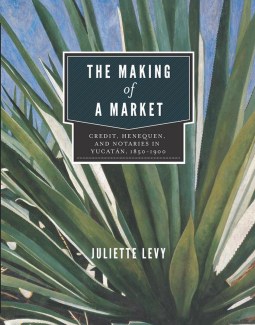
Penn State UP, 2012
My research takes me to Mexico, and my first book was the product of years of work studying local financial networks in Yucatan. I am working on a second book, which takes me back to archives in Yucatan, as well as Mexico City. In between the end of the first book, and the beginning of the second one, I became a digital humanist.
Digital Humanities – or DH as it is often called, is very much a field that defies any one definition. I like to think of it as a place where computational methods/mechanisms/systems meet the Humanities. One of the many ways technology has affected how I operate in the Humanities is that it I have integrated questions of design into intellectual and pedagogical ones. Teaching is for most academics a free-form and self-taught experience. The merging of technology and teaching requires we think about course design – both in terms of process and user experience. This cross-disciplinary nature of DH also makes it a more open field, where collaboration and sharing are the norm rather than the exception. This is in large part why I am working on an open and searchable database of my research documents.
I teach all sorts of classes on Latin American history as well as a gateway course to the History major. We have called it “The Historian’s Workshop” and it teaches lower division History majors the basic tools of historical research – it introduces students to primary sources and how historians use them – as well as historical writing and form. I use twitter in the classroom to reframe my role and that of students in the traditional large lecture hall. This is how Digital Zombies came into being. Digital Zombies is a hybrid (meaning it is both online and not) research project for students, that can be customized to work for different courses at any university/college.
When I am not teaching, you’ll find me researching, writing, and talking about the digital humanities, technology and education, and the formation of financial markets that did not include banks. For this last topic, what interests me most are the legal, social and cultural contexts that form markets. I see markets as a privileged space in which to analyze human interaction – markets exist everywhere and at any time, and make for great places to explore and compare how different societies respond to change.
My first book analyzed the growth of credit markets in the absence of banks in Mexico during the nineteenth century. I just finished a collaboration with a colleague at the University of Utrecht (in the Netherlands) on global comparisons of informal credit markets – the case studies contrast credit markets in Sweden, Japan, Argentina, Albania and India, to mention just a few. I am interested in how markets develop in the absence of formal institutions, and by that token I am interested in all types of informal arrangements, not just economic ones.
You can contact email me via email at juliette@ucr.edu or on twitter @profjuliette.
 Juliette Levy